When Dalsnibba is in the clouds
The Skywalk stands at about 1,500 m (4,921 ft), high enough to spend many days wrapped in cloud while the fjord below stays clear. On other mornings you step out into sunshine above a white sea that fills the valley. Nobody can promise which one you will get, so it pays to know how each tour handles fog and snow before you book.
Why the summit hides in cloud
The summit of Dalsnibba reaches 1,476 m (4,843 ft), and the viewing platform sits just below it. That puts the top right at the height where cloud likes to settle along this coast. Damp air from the Atlantic is pushed up the fjord walls and turns to cloud as it cools on the way up. On plenty of days the village at the head of the Geirangerfjord is bright while the mountain above it is gray. A cloud base a few hundred meters lower than the platform hides the view from the Skywalk completely.
Cloud on a mountain this exposed rarely stays still for long. The top can clear within minutes, then close again before your coffee is finished. A gray morning at the quay tells you little about what the platform will look like at 11 am.
Standing above a sea of clouds
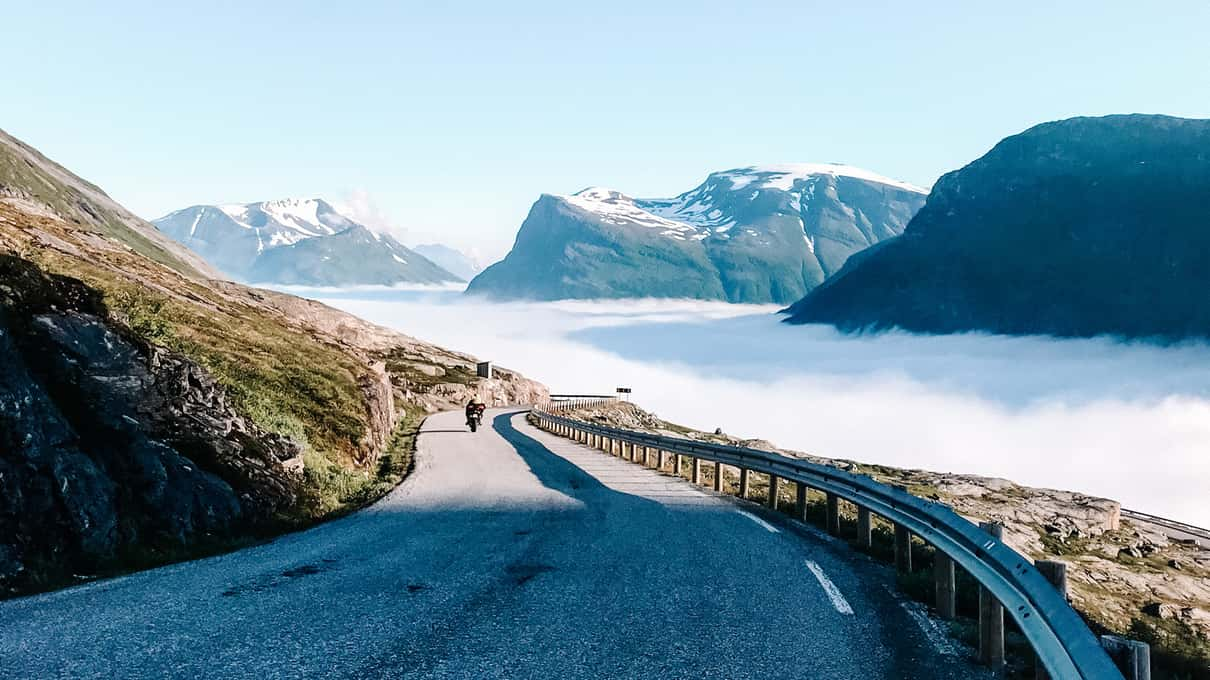
The best surprise Dalsnibba has to offer comes on days when the cloud sits lower than the summit. The coach climbs through the gray on the hairpins of Nibbevegen, the private toll road of about 5 km (3 miles) to the top, and breaks out into sunshine near the end. Below you a flat white layer fills the Geiranger valley, with the higher peaks poking through it like islands. The fjord itself is hidden, which is a loss, but many guests remember this view longer than a clear one.
It cannot be forecast with any certainty and it may last only part of your visit. Treat it as a bonus, and if you get it, take a few photos before the layer breaks up. Our photography guide has tips for shooting fog and bright cloud without losing the detail.
Colder than the quay
Expect the top to feel about 18 °F (10 °C) colder than the pier, often more once the wind gets going. A pleasant 59 °F (15 °C) in the village can mean something close to 41 °F (5 °C) at the railing, and fog makes it feel damp as well. Snow can fall at the summit in any month, July included. Old snow lies in patches beside the road well into summer.
The coach is warm, so you can leave the heavy layer on your seat for the lower stops. Take it with you at the top. A rain shell over a fleece covers most days, with a hat in the pocket and shoes that grip on wet rock. What to wear on Dalsnibba goes through it piece by piece.
When snow or ice shuts the road
Nibbevegen is shut all winter and normally reopens during the second half of May, when the snow has been plowed away. Even in season a fresh fall or black ice can close it for a few hours or a day. Reviewers report that happening more than once in a single September.
Our pick, the 3.5-hour Excursions.no tour from ~$115, states in its listing that the Dalsnibba visit depends on the weather and that the stop is replaced when the top cannot be reached. Reviews written after early autumn snow show what that looks like. Some groups found the road closed after snow and ice, and their guides gave them extra stops by the mountain lakes and at Eagle Bend instead. Another group got up after the road reopened and saw nothing from the platform except snow and fog. Both kinds of reviewer still had a full tour of viewpoints. Neither saw the famous view.
The other listings say less. The panorama bus does not explain what replaces the Skywalk on its 2-hour version, so ask at the tourist information office when you pick up your tickets. The small-group and private tours from Geiranger are silent on it too. The private tour from Ålesund is the one with a clear rule, a full refund when snow or a road closure stops the route, and it checks the road status 3 days ahead and again the day before. Dalsnibba from Ålesund or Hellesylt covers that tour.
A tour with a plan B, from ~$115
If the summit is shut, Excursions.no swaps in other stops, so the morning is not wasted. Free cancellation up to 24 hours before.
Should you cancel the day before?
The four tours that start in Geiranger all allow free cancellation up to 24 hours ahead. That deadline tempts people to read the forecast the evening before and pull out if it looks gray. In most cases we would not. A forecast a day out can warn of rain or a cold front, but it cannot tell you whether one summit will be in cloud at a particular hour. Mountain weather here changes faster than the forecast updates.
The stops lower down also stand on their own. Flydalsjuvet and the Eagle Road sit far below the summit, and they often stay clear when the top does not. The Skywalk and the viewpoints on the way describes each one. Cancel if you care about the summit view alone and the forecast shows heavy snow down to the lakes. On a cruise, with one day in port and nothing to rebook, a cloudy tour still beats a day spent in the village wondering.
Reading the summit webcam
Dalsnibba has a webcam at the top, and it gives a better idea of conditions than any forecast. Look at it the evening before and again over breakfast. By breakfast the free cancellation window has closed, so use it to set expectations and decide how many layers to carry. A white screen means you are in cloud. Snow at the edge of the frame in June or September tells you the road may be slow, or shut for a while.
Glance at it once more if your ship arrives early and the tour leaves later. Fog that hangs at 8 am has often moved on by late morning.
Which tours cope with bad weather
- Our pick. The Excursions.no tour has the clearest fallback among the Geiranger tours and the most reviews by far. Why we chose it;
- Staying low. The 1.5-hour panorama bus from ~$71 goes to Flydalsjuvet and Eagle Bend but not Dalsnibba, so the summit weather does not matter. Reviewers enjoyed it even on cold days of wind and rain;
- A small group. The 3-hour small-group tour from ~$122 has an English-speaking driver-guide. Ask before booking how a closed road is handled;
- Nervous about the drive. Snow and fog make the hairpins feel tighter. Our guide for nervous travelers covers the road and the platform;
- Planning a date. When to go up Dalsnibba shows which months are most likely to have a snow-free road.