What to wear for the Skywalk
The Skywalk stands at about 1,500 m (4,921 ft), and the weather up there pays little attention to the weather on the pier. You step off a warm coach into wind or even snow, while cloud can roll over the platform before you have lined up a photo. A couple of light layers in a small bag take care of nearly all of it.
Why the top feels like another season
The viewpoint on Dalsnibba is marketed at about 1,500 m (4,921 ft), and the road climbs there from the fjord in about 21 km (13 miles). Temperatures at the top often run around 18 °F (10 °C) below those in the village. A mild 59 °F (15 °C) morning on the Geiranger quay can mean about 41 °F (5 °C) on the platform, and that is before the wind. The Skywalk juts out over the drop in the open air, so whatever is blowing up the valley reaches you with nothing in the way.
Snow can fall at the top in any month, and the Nibbevegen toll road is often lined with old snow well into summer. Fog changes things even faster. Cloud can slide over the summit in minutes and turn a bright, dry platform into a damp gray one. That is why the packing advice holds even for a July port day. Our weather and fog guide covers forecasts and webcams, and this page sticks to what goes in your bag.
Layers that work at 1,500 meters
Dress for two climates in one outing. The coach is heated while the summit is not, and you will get on and off several times. Layers you can add or peel off in under a minute beat one heavy coat.
- A base layer. A long-sleeved top in merino wool or a synthetic fabric. Cotton holds on to damp from fog or sweat and then chills you at the first gust;
- A warm middle. A fleece, or a thin insulated jacket that packs into its own pocket. You pull it on at each stop and take it off again on the bus;
- A hooded shell. A rain jacket that also blocks wind. Bring it on a dry day as well, because at this height the wind chills you more than drizzle does;
- Pants that dry fast. Ordinary pants do fine for coach stops. Jeans grow cold and heavy once they are wet, so hiking pants are kinder on a rainy day.
A long wool coat looks smart on deck but works badly here. It is too warm on the coach and too bulky to carry around, and it catches the wind when you lean on the railing for a picture.
Shoes for wet rock and old snow
Apart from the private tour, none of these trips involves a hike, but each stop means a short walk from the bus over wet paving and uneven stone. Early in the season snow walls line the road and patches of old snow linger near the viewpoints, while meltwater keeps the rock slick. Wear shoes with a deep, grippy tread. Sneakers with a decent sole are enough in July and August, when the road is usually free of snow. In late May and June, and again from late September, light hiking shoes or boots keep your feet dry and steady. Leave sandals and smooth-soled deck shoes on the ship.
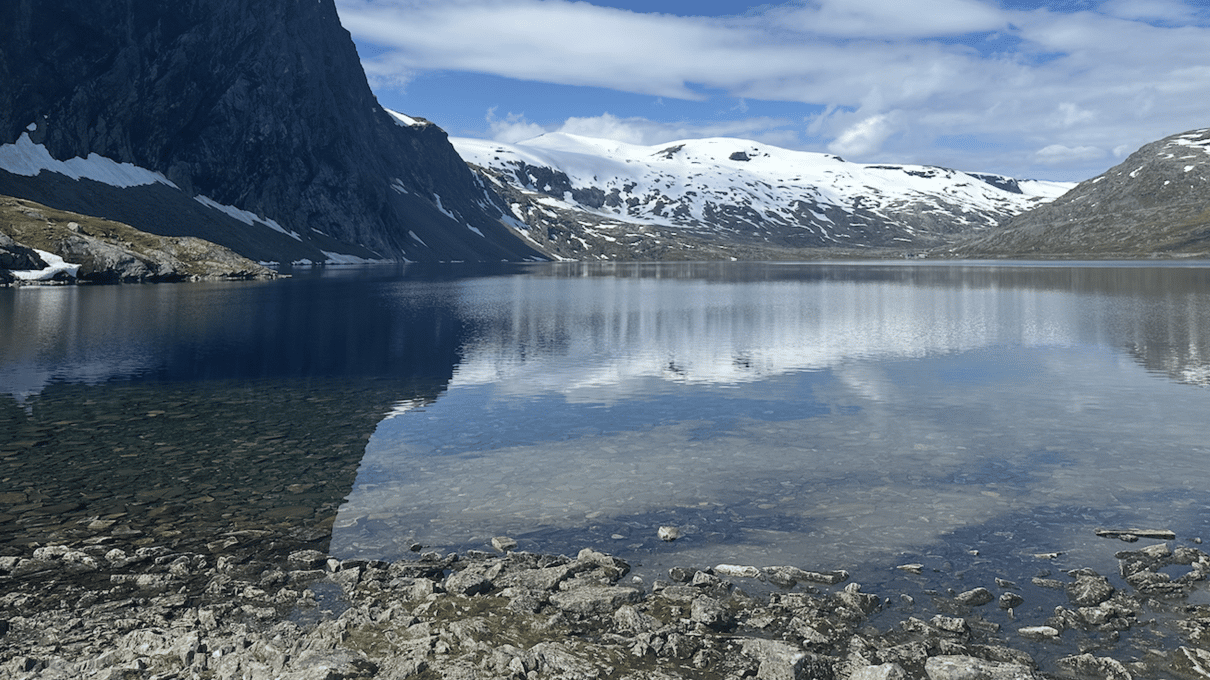
If you book Calm Giant Tour's private fjord tour with Dalsnibba and the Eagle Road from ~$1,882 per group of up to 4, footwear matters more. Its five hours include a waterfall hike and a stroll beside Djupvatnet, a lake at about 1,000 m (3,281 ft) that is often icy into summer, and the listing asks guests to bring comfortable shoes and clothing suited to the weather.
Our pick for a port day, from ~$115
Excursions.no's 3.5-hour coach tour takes in Flydalsjuvet and the Skywalk, then Djupvatnet and Eagle Bend, and the road toll is in the price. Give your ship's name at booking to get the back-to-ship guarantee.
Cold hands and bright snow
Outside high summer, pack thin gloves and a hat. In late May and June, and again in late September or October, the air at the top can sit close to freezing, and wind on the platform makes it feel colder still. Fingers go first, especially if you spend the stop holding a phone out over the glass railing. Touchscreen gloves let you shoot without taking them off, and our photography guide has more on handling a camera in the cold. In July and August most people manage without, though a light hat weighs almost nothing and rescues a foggy afternoon.
Bring sunglasses on a bright day, whatever the month. Snow along the road and on the slopes throws back a lot of light, and the glare tires the eyes within minutes. Sunscreen belongs in the same pocket, since the sun at altitude burns faster than it does at sea level, even when the air feels cold.
A small bag, and what stays on the bus
Stops on these tours are short. One reviewer of our pick counted about four stops of roughly 20 minutes each, and VisitGeiranger's panorama bus makes two photo stops. Pockets or a small daypack are plenty. Keep your phone and your ship card on you, and ask your guide whether a bulky bag can stay on the seat. The panorama bus allows no food or drink on board, so eat something before you go and buy a hot drink at the top.
- Fleece or packable insulated jacket
- Hooded rain shell that blocks wind
- Thin gloves and a hat (late May, June, late September, October)
- Sunglasses and sunscreen
- Shoes with a grippy sole
- A charged phone kept in an inside pocket, since cold drains batteries
- A card for the café and the shop
You will find toilets at the top, and on the panorama bus a free toilet stop at Flydalsjuvet is open from mid-May to mid-September. Cruise passengers who want the whole timing picture, from tender queue to all-aboard, can read our guide for cruise passengers.
If you forget the sweater
The shop at the top, one of the summit facilities described in our guide to the Skywalk and viewpoints, sells wool sweaters and souvenirs, with clothing from the Norwegian brands Devold and Skogstad. A forgotten layer can be fixed on the spot, though Norwegian prices apply, and shopping eats into a stop that may last only 20 minutes. Shop and café share their hours, from 9:30 am to 6 pm in high summer (June 15 to August 14) and until 5 pm for the rest of the season.
If the wind wins, the café is a warm place to wait while the rest of the group walks out to the railing. Our guide for nervous visitors covers that option, which suits anyone who would rather skip the platform for reasons other than cold.
Dressing for the month you go
Snow crews usually finish clearing the road late in May, and the first weeks bring snow walls along the road and winter conditions at the top. July and August are usually snow-free and the mildest months, though fog and rain still come and go. From late September the road can close for snow or ice, and reviewers on our pick describe September days when their group never reached the top. Our month-by-month season guide has the details, and the tour list shows which trips include the summit at all.